

The Inseparable Connection Between Social-Emotional Development and Cognitive Growth.
Welcome to the fourth instalment of our “Growing Minds” blog series at Kids Channel Montessori! Today, we’re exploring how social-emotional development fundamentally shapes cognitive abilities—and why separating “academic learning” from “emotional learning” creates a false dichotomy that serves neither.
The Lesson That Changed My Understanding of Intelligence.
Early in my teaching career, I worked with a 5-year-old boy who could perform remarkable mathematical calculations and read far beyond grade level. Yet this same child would dissolve into overwhelming frustration when facing minor setbacks. Despite his academic prowess, classroom problem-solving eluded him.
In contrast, another child in the same group had more typical academic abilities but demonstrated extraordinary emotional regulation and interpersonal skills. She could negotiate complex social situations, persist through challenges, and adapt her approach when stuck.
Over the years, I’ve followed both children’s development. The academically precocious child struggled socially throughout school until receiving support for emotional regulation. The socially adept child, while initially less academically advanced, developed into a confident learner who excelled through high school and beyond.
This experience fundamentally shaped my understanding of intelligence and success. After years directing Montessori environments and raising two teenagers, I’ve become convinced: cognitive development cannot be separated from social-emotional growth. They are fundamentally intertwined aspects of the same developmental journey.
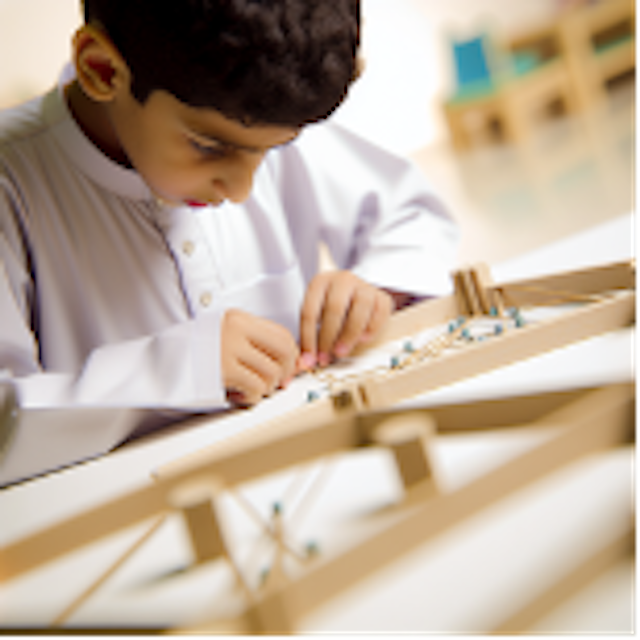
Beyond "Soft Skills": The Neuroscience of Social-Emotional Development.
I’ve watched the research catch up with what Montessori educators have long observed: social-emotional capabilities aren’t supplementary “soft skills”—they’re foundational to how the brain processes, retains, and applies information.
Modern neuroscience reveals several key connections:
The Regulatory Foundation The prefrontal cortex, responsible for both emotional regulation and executive function, develops through social interactions and emotional experiences. This same brain region enables planning, organization, and complex problem-solving.
Classroom observation: Children who develop strong self-regulation consistently demonstrate better attention span, working memory, and cognitive flexibility—the very foundations of academic learning.
The Emotional Memory Connection The brain’s limbic system, central to emotional processing, plays a crucial role in memory formation. Information with emotional relevance receives preferential processing and stronger encoding.
Director’s insight: In my years of classroom observation, I’ve consistently noted that concepts presented with emotional engagement are retained more thoroughly than those taught through emotionally neutral instruction.
The Social Brain Network The neural circuits that process social information overlap significantly with those used for abstract thinking. Social complexity actually drives cognitive complexity.
Personal experience: When my son struggled with abstract mathematical concepts, his breakthrough came not through additional drills, but through collaborative problem-solving with peers. The social context activated different neural pathways that supported his understanding.
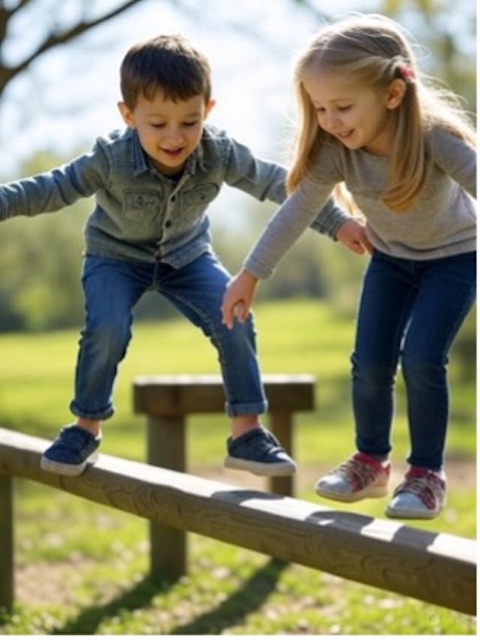
Key Social-Emotional Foundations of Cognitive Success.
Self-Regulation: The Master Skill The ability to manage emotions, maintain attention, and control impulses forms the foundation for all other learning. A child who cannot regulate emotions cannot effectively engage higher-order thinking.
Children who develop strong self-regulation by age six typically demonstrate significantly stronger academic performance throughout elementary school than those with similar academic abilities but weaker regulation skills.
Growth Mindset and Resilience Children who view challenges as opportunities and persist through difficulties develop stronger neural pathways than those who avoid challenges.
Personal example: My daughter initially struggled with writing. Rather than focusing primarily on skill drills, we worked on building her comfort with imperfection and celebrating improvement. This emotional foundation eventually led to her becoming a confident writer who now edits the school newspaper.
Social Awareness and Perspective-Taking The cognitive complexity required to understand others’ perspectives builds neural architecture that supports academic thinking.
Classroom evidence: Our primary students who excel at perspective-taking activities typically demonstrate stronger reading comprehension, as both skills rely on similar cognitive processes of inferring unstated information.
Intrinsic Motivation and Agency Children driven by internal curiosity rather than external rewards engage more deeply with learning and develop stronger neural connections.
Personal experience: My son’s interest in astronomy emerged not from our curriculum but from his fascination with the night sky. His self-directed research led to deeper scientific understanding than any assigned study could have produced.

Developmental Milestones: Social-Emotional Growth Through the Years.
-
Birth to Age 3: Attachment and Basic Regulation During these foundational years, secure attachment relationships literally shape brain architecture. Children develop basic emotional regulation within the context of responsive relationships.
Director’s insight: In our toddler program, we prioritized relationship continuity over academic exposure. Children with stable, attached relationships show measurably lower stress and greater cognitive receptivity.
Ages 3-6: Self-Regulation and Theory of Mind During this critical period, children develop the ability to understand that others have different thoughts and feelings. This cognitive milestone enables more sophisticated social interactions and abstract thinking.
Classroom approach: Our peace table and conflict resolution process develop perspective-taking skills that transfer to academic areas like reading comprehension and scientific hypothesis testing.
Personal experience: When my daughter was four, we began using perspective-based questions during Storytime: “How do you think the character feels? What might she be thinking?” These discussions noticeably enhanced both her empathy and her reading comprehension.
Ages 6-9: Social Navigation and Emotional Vocabulary Children develop increasingly sophisticated emotional understanding and social problem-solving abilities. Their growing emotional vocabulary enables nuanced self-expression and interpersonal navigation.
Home application: Try to include regular home meetings where your children can practice articulating feelings, negotiating solutions, and considering multiple perspectives—skills that directly transfer to analytical thinking across subjects.
Ages 9-12: Identity and Moral Reasoning Pre-adolescents develop more complex understanding of themselves in relation to others. Their moral reasoning becomes more sophisticated, considering abstract principles beyond immediate consequences.
Parent experience: As my children entered this stage, our family discussions about ethical dilemmas became increasingly harder to resolve unanimously. This same cognitive complexity appeared in their academic work as they began considering multiple factors in historical events and scientific systems.
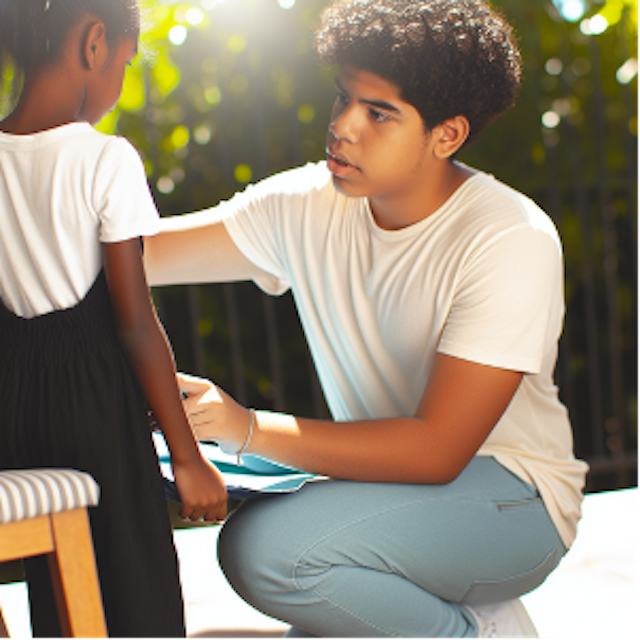
Seven Practices That Strengthen Both Heart and Mind.
- Normalize Emotions Through Naming Helping children identify and name emotions builds both emotional intelligence and linguistic precision. This process activates integration between the brain’s limbic system and prefrontal cortex.
Quick tip: Create a rich emotional vocabulary beyond basic terms. Instead of just “mad,” use “frustrated,” “disappointed,” or “overwhelmed” as appropriate.
Personal approach: With my teenagers, we still practice emotional specificity. The difference between “annoyed” and “resentful” matters, and precision helps them manage emotions more effectively.
- Implement Collaborative Problem-Solving Rather than imposing solutions, involve children in resolving problems. This builds both emotional regulation and cognitive flexibility.
Classroom evidence: When we shifted to a more collaborative approach to classroom conflicts, we observed improvements not only in behaviour but in children’s academic problem-solving approaches as well.
- Practice Mindful Reflection Regular opportunities for reflection develop metacognition—thinking about one’s own thinking and feeling processes.
Director’s insight: Our classrooms include designated reflection spaces and regular practices for considering both the process and outcome of work. Children who engage regularly in reflection demonstrate stronger planning abilities across domains.
- Establish Connection Before Correction Addressing emotional needs before behavioural or academic correction creates neural safety that enables learning.
Personal experience: With my son, academic interventions were ineffective until we addressed underlying anxiety. Once emotionally regulated, he could access his cognitive capabilities more fully.
- Use Natural Consequences Over Punishments Natural and logical consequences build understanding of cause-effect relationships in both social and physical contexts.
Home application: When your child spills water, they clean it up—not as punishment but as the logical next step. This approach builds responsibility while teaching physical properties and practical skills.
- Create Opportunities for Meaningful Contribution Children develop confidence and purpose through making authentic contributions to their community.
Students who participate in genuine community service consistently demonstrate stronger motivation and engagement in academic pursuits than those without these opportunities.
- Model Emotional Intelligence Children learn emotional regulation primarily through watching the adults in their lives navigate challenges.
Personal reflection: Some of my most important parenting moments have been when I’ve repaired situations after my own emotional reactions, showing my children that recovery and reconnection are possible after mistakes.

When Heart and Mind Disconnect: Warning Signs and Interventions.
The Anxious Achiever Children who perform well academically but exhibit excessive perfectionism or anxiety about mistakes are often developing cognitive abilities at the expense of emotional well-being. This pattern typically limits creative thinking and risk-taking.
Intervention approach: We deliberately introduce “productive failure” opportunities where children learn that mistakes are valuable parts of the learning process, not emergencies to be avoided.
The Frustrated Capable Child Children with strong cognitive abilities but poor frustration tolerance often underperform academically because emotional regulation challenges prevent them from persisting through difficulties.
Intervention example: With one such student, we implemented a private signal system where he could indicate escalating frustration before reaching his breaking point. This emotional scaffolding eventually helped him develop internal regulation.
The Socially Disconnected Learner Children who struggle with peer relationships often show compartmentalized thinking and difficulty with perspective-taking across domains.
Classroom strategy: Strategic partnership work with gradually increasing social complexity helps build social confidence while enhancing collaborative problem-solving skills.
Personal experience: My daughter went through a period of social difficulty in middle school. Supporting her through this challenge actually corresponded with deeper analytical thinking in her academic work as she developed more nuanced understanding of social dynamics.

Digital Age Challenges to Integrated Development.
I’ve observed specific challenges to integrated social-emotional and cognitive development:
The Empathy Gap Screen-based interaction reduces exposure to facial micro expressions and bodily cues that develop empathy circuits in the developing brain.
Director’s response: We intentionally increased face-to-face collaboration opportunities in our elementary program to counterbalance screen time children may experience outside school.
The Patience Deficit Digital experiences often provide immediate feedback and gratification, potentially undermining development of the delayed gratification abilities that predict academic success.
Family approach: In our home, we balanced technology with activities requiring sustained attention and delayed outcomes—cooking complex recipes, gardening, and multi-day projects.
The Regulation Challenge Many digital experiences are designed to create high stimulation, potentially training the brain to expect constant novelty and undermining the development of self-regulation.
Home adaptation: Try increasing or incorporating explicit self-regulation practices like mindfulness and body awareness to help your child develop internal regulation capabilities.
Personal experience: With my teenagers, we found that regular outdoor activities without devices helped reset their regulatory systems and improved focus during academic work.

The Long View: Social-Emotional Development and Lifelong Success.
Academic Resilience Children with strong emotional foundations demonstrate greater academic persistence through challenging transitions and setbacks.
Alumni evidence: Our graduates consistently report that their emotional preparation—not just academic skills—carried them through challenging academic environments.
Leadership Emergence Children who develop strong social awareness and emotional intelligence often emerge as leaders in diverse contexts.
Personal observation: My daughter’s emotional intelligence has positioned her as a peer mediator at school—a leadership role that draws on her social-emotional capabilities while developing advanced communication skills.
Career Adaptability In a rapidly changing economy, social-emotional capabilities enable adaptation to new circumstances and continuous learning.
Relationship Success Perhaps most importantly, children with integrated social-emotional development typically form more satisfying personal relationships throughout life.
Parent perspective: As my teenagers navigate increasingly complex social and romantic relationships, I’m repeatedly grateful for their emotional vocabulary and self-awareness. These capabilities serve them far beyond any specific academic knowledge.
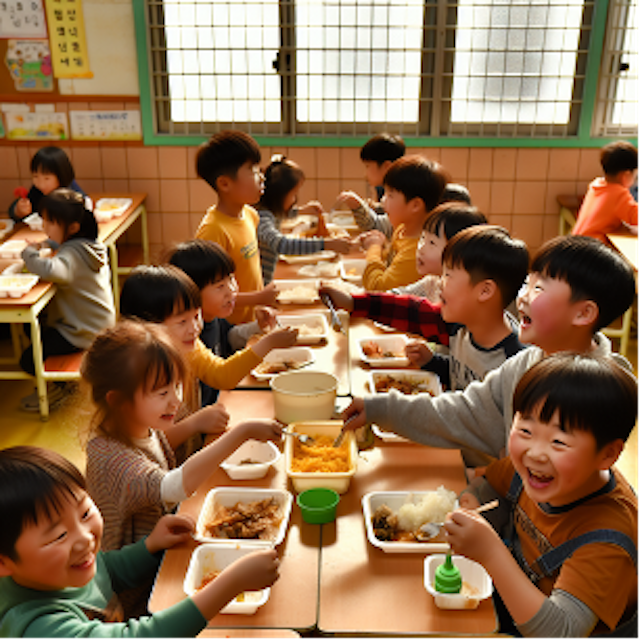
Starting Today: Three Practices for Integrated Development.
Here are my recommendations for nurturing integrated social-emotional and cognitive growth:
Practice Emotion-Inclusive Conversations When discussing your child’s day or activities, include emotional elements alongside factual content: “What part of the project made you feel proud?” “Was there anything that felt challenging?” This integration helps children connect emotional experience with cognitive processing. Describe some parts of your day in a similar way – this gives them a working template to try out.
Quick application: Tonight at dinner, try asking not just “What did you learn today?” but “What made you curious today?” or “When did you feel most confident today?”
Give an example – “I had someone missing from work today – It was tiring – but I got to do things I hadn’t done before, so that was good”
Reframe Mistakes as Information Help children view errors as valuable feedback rather than failures. “That result gives us important information about what to try next” builds both emotional resilience and cognitive flexibility.
Director’s insight: Classrooms that celebrate productive mistakes show measurably higher rates of creative problem-solving and student-initiated challenges.
Build Reflection Rituals Create regular opportunities to reflect on both process and outcome. Simple questions like “What worked well?” “What would you do differently next time?” develop metacognition while normalizing continuous improvement.
Family practice: In our home, Sunday dinners include a brief reflection on the week—challenges faced, strategies that helped, and lessons learned. This simple ritual has built reflective thinking that serves both emotional processing and academic growth.
Looking Forward: The Integration Continues.
As my own children navigate their teenage years, I continue to witness how their early social-emotional foundations shape their cognitive approaches. When my son faces a challenging physics problem, it’s his emotional regulation and growth mindset—not just his mathematical knowledge—that carries him through. When my daughter analyses complex literature, her social awareness enables her to perceive nuanced character motivations that enrich her analysis.
The artificial separation between heart and mind serves neither. Children develop as integrated beings, and our educational approaches should honour that integration.
In our next “Growing Minds” blog post, I’ll explore how independence develops through the stages of childhood and adolescence. Until then, I encourage you to observe how your child’s emotional experiences and social interactions are continuously shaping their cognitive development—and how their growing mental abilities influence their emotional understanding.
,,
