
The Profound Connection Between Movement and Language Development
Welcome back to our “Growing Minds” blog series at Kids Channel Montessori! Today, we’re diving into a fascinating topic: how movement and language are deeply interconnected in the developing child.
When My Son's Body Taught His Brain to Speak.
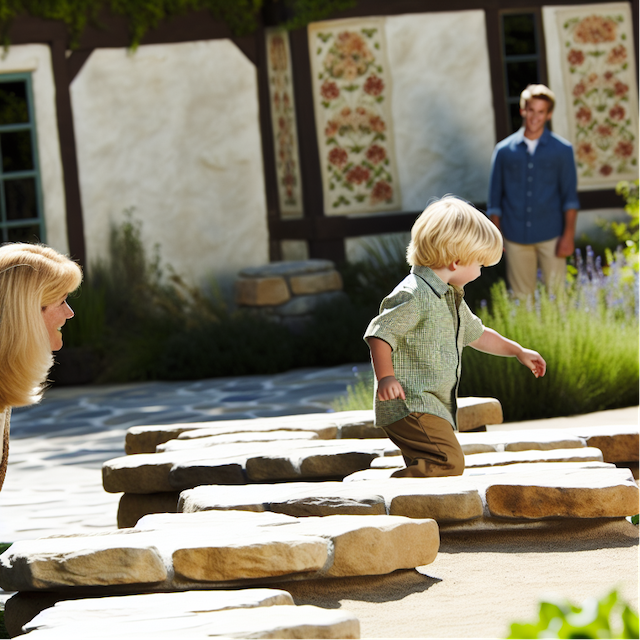
I’ll never forget watching my son at 14 months, struggling to master a challenging stair step in our backyard. For days, he worked at climbing and descending that same step with intense concentration. The day he finally conquered it confidently, something remarkable happened — he spoke his first two-word phrase: “Me up!”
This wasn’t coincidence. After decades in Montessori education, I’ve observed this pattern repeatedly: significant motor breakthroughs often precede language leaps. There’s a neurological reason for this connection that Maria Montessori recognized long before modern brain science confirmed it.
In our Montessori classrooms, we create environments that honour this profound connection between movement and language. The results speak volumes about how children truly learn.
The Hand-Brain Connection: What Science Tells Us Now.
Modern neuroscience has validated what Montessori educators have practiced for over a century: movement doesn’t just express learning—it creates learning. Here’s what research has revealed about this remarkable connection:
The Motor-Language Neural Pathway The same brain areas responsible for sequencing physical movements (cerebellum and Broca’s area) also process language sequencing. When children develop coordination and motor planning, they’re simultaneously building neural architecture for speech and language.
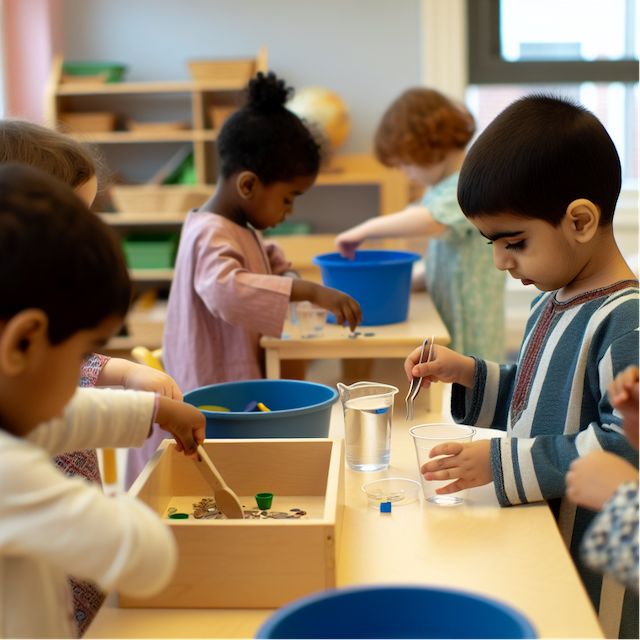
Hand Development and Brain Development The density of nerve endings in children’s hands creates a direct superhighway to brain development. As children refine hand movements, language centres receive powerful stimulation. This is why activities like finger plays, beading, and practical life exercises correlate so strongly with language growth.
Vestibular System Effects Balance and coordination activities stimulate the vestibular system, which has direct neural connections to language processing areas of the brain. Children with stronger vestibular development typically demonstrate more advanced language skills.
I’ve seen this play out countless times—the child struggling with balance often struggles with language sequencing, while children with strong motor coordination typically develop verbal fluency earlier.
Critical Movement Patterns That Boost Language Development.
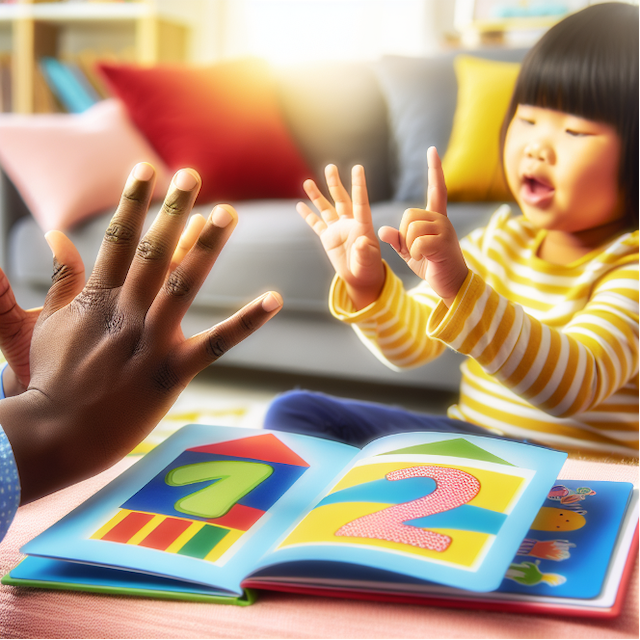
- Cross-Lateral Movement When children cross the midline of their bodies (reaching across with the right hand to the left side), they strengthen connections between the brain’s hemispheres. This integration is essential for reading, writing, and complex language processing.
Classroom example: In our primary classrooms, we deliberately place materials to encourage reaching across the midline. The improvement in children’s sentence structure after several months of these movements is remarkable.
- Rhythmic Movement Patterns Activities with consistent rhythm—walking, clapping patterns, bouncing balls—help children internalize the cadence and flow of language.
- Fine Motor Precision The neural pathways developed through precise finger movements directly enhance articulation abilities. There’s a direct correlation between finger dexterity and speech clarity.
Observation: In 25 years of classroom observation, I’ve consistently noted that children who master button frames, bead stringing, and pouring exercises early typically develop clearer articulation and more complex sentence structures.
- Sequenced Movement Patterns Following multi-step physical sequences (like those in our practical life exercises) builds the same sequential processing required for proper sentence structure and storytelling.
Classroom evidence: Our primary students who excel at multi-step practical life activities typically show more advanced storytelling abilities, with clear beginning, middle, and end sequencing.
How Movement Prepares the Brain for Language: Ages and Stages.
Infants (0-12 months) Freedom of movement during this period is absolutely critical. Unrestricted tummy time, crawling, and early grasping set the stage for language circuits.
Director’s insight: In parent-infant classes, we emphasize freedom of movement over containment devices like walkers. Infants with more floor time consistently show earlier language emergence.
Personal experience: With both my children, we prioritized floor time and freedom of movement from birth.
Toddlers (1-3 years) This explosive period of both movement and language requires maximum opportunities for whole-body coordination alongside fine motor refinement.
Classroom application: Our toddler environments feature challenging climbing opportunities, pushing/pulling activities, and increasingly refined fine motor work. We consistently observe vocabulary explosions following mastery of challenging gross motor skills.
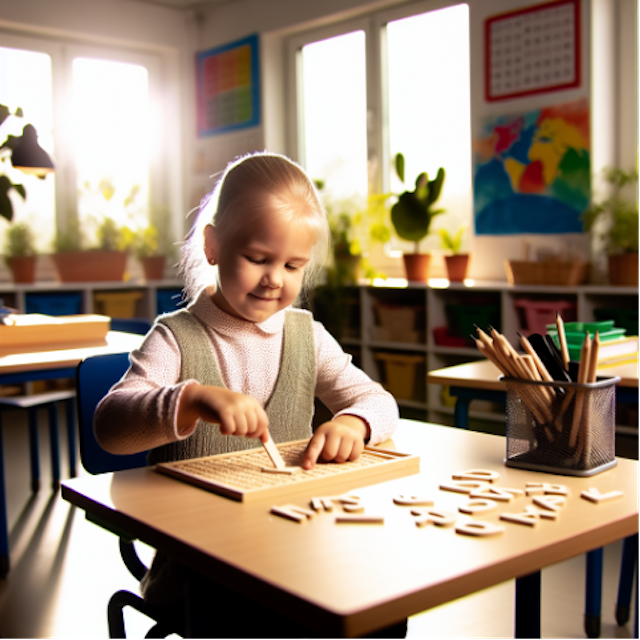
Primary (3-6 years) Refined movement patterns, especially fine motor control and eye-hand coordination, support the explosion into writing and reading.
Children who struggle with reading often show earlier signs of motor planning difficulties. When we address the underlying motor issues, reading often improves naturally.
Six Movement Activities That Enhance Language - That You Can Do Today.
After guiding hundreds of families through this movement-language connection, I’ve developed simple activities that parents can implement immediately:
- Fingerplays With Movement Sequences Traditional rhymes like “Itsy Bitsy Spider” or “Open Shut Them” develop finger dexterity while simultaneously building vocabulary and sequencing skills. Create a daily fingerplay time during.
Quick tip: Focus on precision of the movements rather than speed. The neural benefits come from accuracy.
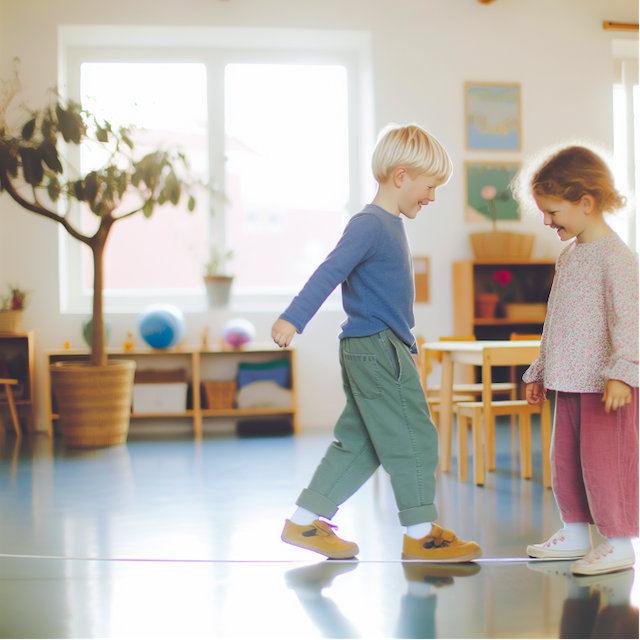
- Balance Walk Storytelling Create a simple balance beam (even a line of tape on the floor works well) and invite your child to walk while telling a story. The vestibular stimulation literally activates language centres in real-time.
- Directional Vocabulary Obstacle Courses Create simple obstacles using household items and narrate with precise directional language: “Crawl under the table, step over the pillow, walk around the chair.” This connects physical experience with spatial vocabulary.
- Rhythmic Movement Songs Songs with coordinated movements like “Head, Shoulders, Knees and Toes” integrate rhythm, vocabulary, and body awareness simultaneously.
Classroom observation: Children who participate regularly in movement songs typically demonstrate more rhythmic speech patterns and better articulation.
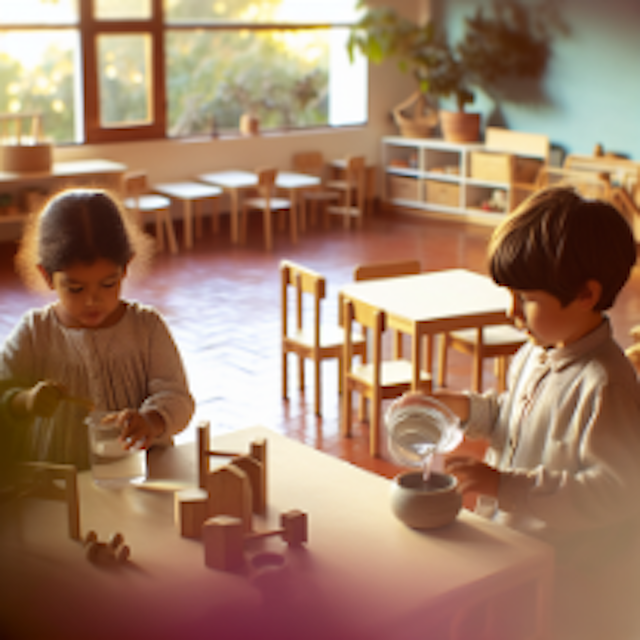
- Fine Motor Activities With Narration While your child strings beads, transfers water, or works with play dough, provide rich vocabulary about their actions: “You’re carefully squeezing that dropper to transfer the water.” This connects the hand movements directly to language.
- Cross-Midline Games Simple games like “Simon Says” that require crossing hands to opposite shoulders, knees, or ears strengthen the corpus callosum—the bridge between brain hemispheres that’s essential for reading and writing.
Director’s insight: In our classrooms, we track progress in cross-lateral movement alongside language development. The correlation is remarkably consistent.
Real Results: What I've Seen in 25 Years of Connecting Movement and Language
The movement-language connection isn’t just theoretical—I’ve seen the transformative results throughout my career:
Overcoming Speech Delays Some of our most remarkable success stories have come from children with speech delays who received targeted movement interventions. One 4-year-old boy entered our program speaking in single words, but after six months of focused balance, coordination, and fine motor work, he progressed to complex sentences.
Reading Readiness Children who develop strong movement foundations consistently show easier transitions into reading. The neural pathways developed through sequenced movement directly support decoding skills.
Expressive Writing The hand-brain connection continues to benefit children as they develop writing skills. Students with refined fine motor control typically produce more elaborate written narratives.
Public Speaking Confidence Perhaps most surprisingly, children with strong body awareness and coordination typically develop greater confidence in verbal expression. The body-mind integration creates a foundation for comfortable self-expression.
How Environments Should Support the Movement-Language Connection.
Montessori classrooms are designed to maximize this vital connection: You can do it at home too!
Prepared Environments Try to find activities that progress from gross motor to increasingly refined movements, all accompanied by precise language. Activities that help to refine skills are so important.
Freedom of Movement Design your home activities to encourage purposeful movement throughout the day, recognizing that movement activates optimal brain function.
Integration Across The Day Even seemingly static activities involve movement components— Train yourself to do less and less for your little ones. Movement is so important for learning acquisition.
Outdoor Connections Prioritize outdoor time not just for physical health but because natural environments provide rich sensory input that stimulates language development. The child balancing on a log while describing what they see is developing both systems simultaneously.
Starting Today: One Movement Practice to Enhance Your Child's Language.
If parents take just one idea from this article, I recommend this: Institute a daily “movement story” time. Have your child balance on one foot, walk a line, or rock on a balance board while telling you about their day or recounting a favorite story. Just 5-10 minutes of this combined movement-language activity produces remarkable benefits.
With my own teenagers, we maintained movement-based family activities long past the early childhood years. Even now, our most meaningful conversations often happen during hikes or bike rides. The body in motion truly does free the mind and tongue.
In my next post in this “Growing Minds” series, we’ll explore how sensory experiences form the foundation for abstract thinking. Until then, I encourage you to observe the fascinating relationship between your child’s movement and language development. You’ll likely discover patterns that illuminate their unique learning journey.
,,
