
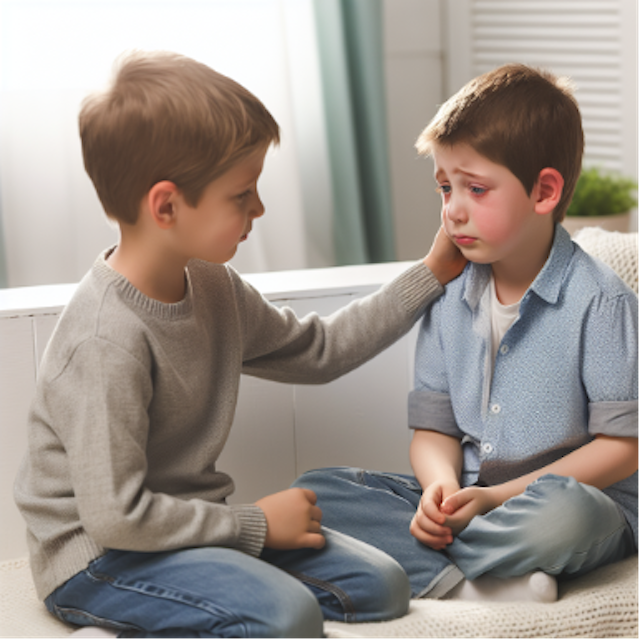
Nurturing Social Understanding in Early and Middle Childhood.
Welcome to the seventh instalment of our “Growing Minds” blog series at Kids Channel Montessori! Today, we’re exploring how empathy and social understanding develop from birth through age eleven—and why supporting these capacities is fundamental to raising compassionate, socially adept human beings.
The Empathy Imperative.
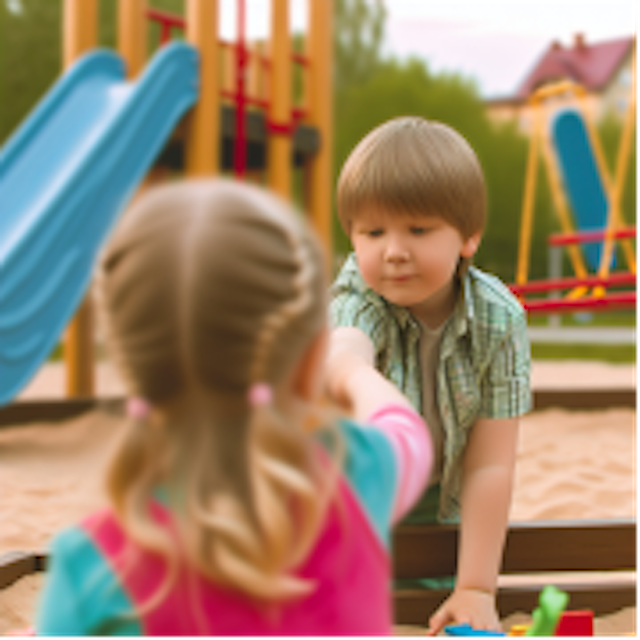
A few years ago during lunch, I observed a moment that exemplifies why I’ve dedicated my career to supporting children’s social-emotional development. A five-year-old noticed her classmate struggling to open his lunchbox, set aside her own meal, and quietly moved to help without being prompted. When I later acknowledged her kindness, she replied with striking insight: “His face looked the same as mine does when things are hard.”
This moment represents what developmental psychologists identify as a profound human achievement: the capacity to recognize another’s emotional state and respond with appropriate care. After decades guiding both Montessori environments and my own children’s development, I’ve witnessed how certain approaches nurture natural empathy while others inadvertently diminish it.
The development of empathy isn’t just about raising “nice” children—it’s about cultivating the fundamental human capacity to understand perspectives beyond our own, a skill increasingly crucial in our complex, interconnected world.
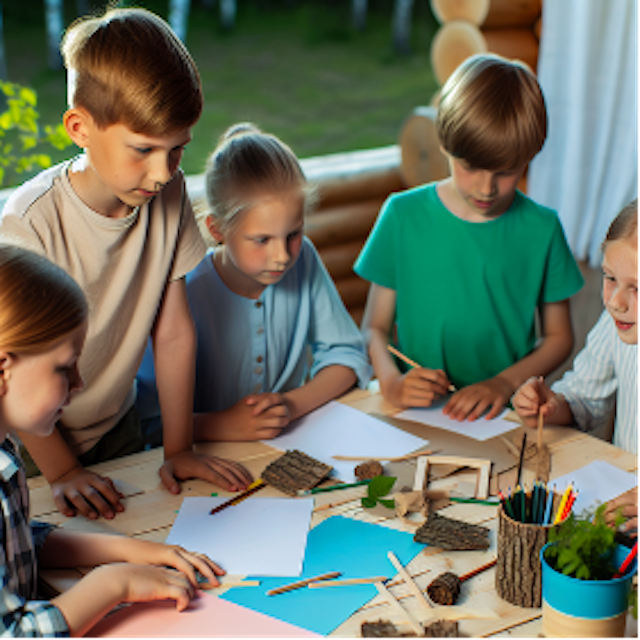
The Science of Developing Empathy.
Understanding how empathy naturally develops helps us support rather than inadvertently hinder this essential capacity.
The Neurological Foundations Empathy engages multiple brain networks, integrating emotional processing, perspective taking, and self-regulation in sophisticated patterns.
Research note: Neuroimaging studies reveal that empathic responses activate mirror neuron systems that help us internally simulate others’ experiences—neural pathways strengthened through positive social experiences and weakened through excessive self-focus or digital interaction patterns.
The Developmental Progression Empathy follows a natural developmental arc that builds complexity through predictable stages when appropriately nurtured.
Director’s observation: I’ve consistently observed how empathic capacity evolves from basic emotional contagion in infancy to sophisticated perspective-taking in later childhood—provided environments support this progression.
The Psychological Components Empathy requires specific psychological conditions that either flourish or diminish based on environmental factors.
Personal experience: When my son struggled with perspective-taking in early elementary years, we discovered that reducing his own emotional stress and increasing opportunity for guided reflection dramatically enhanced his capacity to consider others’ viewpoints. This experience fundamentally shaped my approach to supporting empathic development both at home and in our Montessori environments.
Four Phases of Empathic Development.
- Emotional Resonance (Birth to Age 3)
During these formative years, children establish the foundations of empathy through emotional refinement and the experience of having their own feelings recognized.
Key Developmental Processes:
- Emotional mirroring and refinement
- Development of secure attachment
- Beginning recognition of basic emotions
- Experience of having own feelings acknowledged
- Developmentally appropriate emotional regulation
Home strategy: Try to emphasize gentle, responsive caregiving that validates emotional experiences while providing appropriate co-regulation support.
Personal example: When my daughter was two, we established a simple practice of naming her emotions: “You’re feeling frustrated because the block tower fell.” This consistent emotional validation built neural pathways for both emotional self-awareness and later recognition of others’ feelings.
Common Obstacle: Adult discomfort with children’s difficult emotions often leads to dismissal or distraction rather than acknowledgment, hampering development of the emotional recognition essential for empathy.
Empathy Milestone: The ability to show basic concern when another person is upset signals healthy development in this phase.
- Perspective Awakening (Ages 3-6)
Children in this stage develop the fundamental understanding that others have different thoughts, feelings, and preferences than their own.
Key Developmental Processes:
- Beginning theory of mind development
- Recognition of others’ preferences and viewpoints
- Emerging perspective-taking in concrete situations
- Basic emotional cause-effect understanding
- Early helping behaviours
Classroom evidence: Primary students consistently demonstrate emerging perspective awareness through their spontaneous helping behaviours and growing appreciation of classmates’ differing preferences.
Director’s insight: The four-year-old who brings a specific material to a classmate because “I know you like the pink tower best” demonstrates early perspective-taking that forms the foundation for more sophisticated empathy.
Common Obstacle: Highly egocentric family communication patterns that rarely acknowledge different perspectives can limit children’s awareness that others may see or experience situations differently.
Empathy Milestone: The spontaneous recognition that someone else might like or want something different than they do marks successful development in this domain.
- Cognitive Empathy (Ages 6-9)
During this critical period, children develop the ability to understand others’ emotional perspectives even when different from their own immediate experience.
Key Developmental Processes:
- Complex perspective-taking across situations
- Understanding of emotional diversity
- Recognition of hidden or mixed emotions
- Developing awareness of contextual factors in feelings
- Growing capacity for empathic inference
Classroom approach: The elementary program integrates perspective-taking exercises throughout the curriculum, using literature, history, and community events as opportunities to consider diverse viewpoints.
Parent experience: When my son struggled to understand why a friend remained upset after an apology, we used drawing to help him visualize his friend’s different perspective. This concrete representation built his capacity to recognize that others might maintain different emotional responses even after his own feelings had shifted.
Common Obstacle: Excessive focus on rule-following without exploration of emotional impacts can limit children’s development of genuine perspective-taking capacities.
Empathy Milestone: The ability to accurately identify others’ feelings even when they differ from what the child would feel in the same situation signals healthy empathic development at this stage.
- Empathic Action (Ages 9-11)
Pre-adolescents develop the capacity to translate empathic understanding into appropriate responsive action across diverse situations.
Key Developmental Processes:
- Integration of emotional understanding with helping behaviour
- Differentiation of others’ needs from personal preferences
- Complex emotional inference in varied contexts
- Development of prosocial problem-solving
- Empathic leadership capacity
Our upper elementary students who experienced regular opportunities for meaningful contribution consistently demonstrate stronger empathic action capacities than those whose helping experiences were limited or artificial.
Personal approach: When my daughter expressed concern about a classmate experiencing social isolation, we explored various response options, considering the other child’s personality and preferences rather than just what might make my daughter feel better. This thoughtful consideration of empathic action built sophisticated response capabilities.
Common Obstacle: Adult tendency to prescribe specific helping behaviours rather than engaging children in empathic problem-solving can limit development of authentic responsive capacities.
Empathy Milestone: The ability to consider what would genuinely help another person, even when different from their own preferences, signals healthy development in this domain.

The Empathic Environment: Communication, Connection, and Capacity.
The Communication Environment Empathic capacity flourishes when communication patterns consistently acknowledge emotional realities and diverse perspectives.
Home strategy: In our family, we established a dinner ritual of “different views”—sharing various perspectives on a situation or story. This simple communication practice noticeably enhanced my children’s automatic consideration of viewpoints beyond their own, and can be very amusing too.
The Connection Environment Empathy develops through relationships that balance security with exposure to appropriate emotional diversity.
Director’s insight: After observing children’s social development, I’ve found that their most sophisticated empathic responses emerge within environments that combine emotional safety with gentle challenges to consider perspectives beyond their immediate circle.
The Capacity Environment Children’s empathic development requires support for the self-regulation that makes sustained attention to others possible.
Classroom evidence: Students with stronger emotional regulation skills consistently demonstrate more sophisticated empathic responses than those whose own emotional needs overwhelm their capacity to attend to others.
Personal reflection: One of my most important parenting realizations was understanding that supporting my children’s own emotional regulation wasn’t separate from developing their empathy—it was essential to it. When their emotional cups were filled, they had significantly greater capacity to notice and respond to others’ needs.

Four Empathy Inhibitors: Modern Challenges to Social-Emotional Development.
The Attention Economy Digital platforms designed to capture and hold attention often create interaction patterns that reduce capacity for sustained empathic presence.
Director’s response: We’ve structured our environments to emphasize face-to-face interaction and extended concentration, building the attentional foundations necessary for genuine empathic connection.
Children with limited screen time typically demonstrate significantly greater empathic responsiveness than those with heavy digital consumption patterns.
The Adult-Scripted Social World Highly scheduled, adult-directed activities often limit children’s opportunities to navigate authentic social challenges that build empathic problem-solving.
Home strategy: In our family, we preserved substantial time for self-directed social play where children could develop natural conflict resolution and perspective-taking capacities.
Quick tip: Resist the urge to immediately solve social problems among children; instead, provide supportive scaffolding that helps them develop their own empathic solutions.
The Empathic Double-Bind Children receive contradictory messages to be kind while simultaneously succeeding in competitive systems that may require putting personal achievement above communal consideration.
Classroom observation: Students in collaborative rather than competitive learning environments consistently demonstrate stronger empathic development and prosocial behaviour.
Parent approach: We intentionally celebrated acts of kindness and community contribution with the same enthusiasm given to individual achievements, establishing values alignment that supported authentic empathic development.
The Narrowing Social Circle Many children experience increasingly homogeneous social environments with limited exposure to diverse perspectives and experiences.
Home strategy: Try to integrate regular opportunities to connect with people of varying ages, backgrounds, and life experiences, expanding your child’s capacity to understand perspectives beyond their immediate peer group.
Director’s insight: Children who experience regular meaningful interaction across diverse groups demonstrate stronger perspective-taking capabilities than those whose social circles remain narrowly defined.
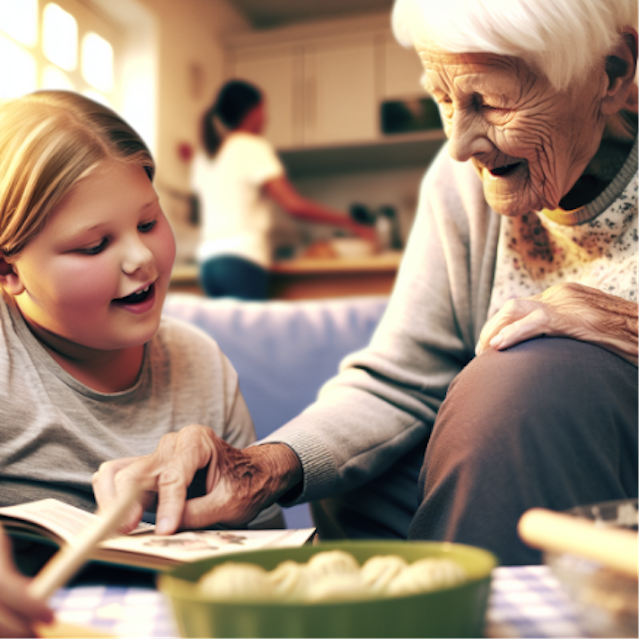
Empathy Milestones: A Developmental Roadmap.
Early Childhood (Ages 2-5)
- Shows appropriate emotional response to others’ feelings
- Offers comfort to someone in distress
- Recognizes basic emotions in others
- Demonstrates awareness of others’ preferences
- Shows beginning perspective-taking in concrete situations
- Engages in simple helping behaviours
- Shows interest in others’ experiences
- Demonstrates basic turn-taking and sharing
Director’s observation: Children who demonstrate these indicators by age five typically approach elementary social interactions with greater sophistication and fewer conflicts.
Family example: When my son at age four began spontaneously gathering particular materials for friends based on their known preferences, his behaviour demonstrated healthy development of the perspective awareness that forms empathy’s foundation.
Middle Childhood (Ages 6-11)
- Shows concern for others beyond immediate circle
- Recognizes complex or hidden emotions in others
- Considers others’ perspectives when problem-solving
- Demonstrates appropriate helping across diverse situations
- Shows understanding of contextual factors in feelings
- Adapts behaviour based on others’ emotional needs
- Engages in prosocial actions without external rewards
- Demonstrates awareness of social dynamics and inclusion issues
Classroom evidence: Upper elementary students who display these indicators consistently demonstrate stronger friendship skills and leadership capacities than those with less developed empathic abilities.
Personal example: When my daughter noticed a new classmate struggling to find connection, she not only invited inclusion but considered activities matching the child’s interests rather than simply her own preferences.
Nurturing the Empathic Spirit: Practices for Parents and Educators.
Throughout my career, I’ve identified key approaches that effectively nurture developing empathy:
- Model Perspective Narration Regularly voice the process of considering others’ viewpoints and feelings in your own decision-making.
Home application: In our family, we practiced thinking aloud about others’ potential feelings: “I wonder how Grandma might feel if we show up late without calling” or “The new student might feel nervous about not knowing our routines.” This narration demonstrated the internal process of perspective consideration.
Quick tip: Look for daily opportunities to wonder aloud about others’ experiences, making perspective-taking a visible, valued process.
- Expand Emotional Vocabulary Nurture sophisticated understanding of feelings beyond basic emotion labels.
Family example: Beyond simple emotion words, we introduced nuanced feeling vocabulary through books, conversation, and observation. This expanded emotional lexicon gave my children more precise tools for recognizing both their own and others’ emotional states.
Director’s insight: Children with diverse emotional vocabulary demonstrate measurably stronger empathic accuracy than those limited to basic emotion labels.
- Practice Perspective Pausing Cultivate the habit of pausing to consider others’ viewpoints before responding.
Classroom approach: We teach a simple “perspective pause” technique where children briefly consider “How might they be feeling?” and “What might they need?” before responding to social challenges.
Personal reflection: Establishing a family norm of “checking in” with others’ potential perspectives before making decisions created an automatic empathic reference point that I’ve observed my children carrying into their independent interactions.
- Provide Meaningful Contribution Create regular opportunities for authentic helping that matters.
Children who experience their contributions as genuinely valuable to others develop significantly stronger empathic motivation than those whose helping opportunities feel artificial or inconsequential.
Home strategy: In our household, we established “real work” opportunities where children’s efforts made meaningful difference to family functioning. The authentic value of their contribution built motivation beyond what synthetic “helping activities” could generate.
- Validate Empathic Instincts Recognize and affirm natural empathic responses when they emerge.
Classroom evidence: Children whose spontaneous expressions of care receive specific acknowledgment demonstrate increased frequency of empathic behaviour compared to those receiving generic praise or no recognition.
Quick application: When noticing empathic acts, name the specific contribution: “You noticed Jamal looked confused and offered to explain the directions. That kind of attention helps everyone feel included in our community.”
- Create Perspective-Taking Opportunities Intentionally engage children in shifting viewpoints through stories, role-play, and reflection.
Director’s perspective: Children who regularly practice explicit perspective-taking through structured activities demonstrate greater spontaneous empathy in natural social contexts.
Family example: We established a simple practice of “different eyes”—looking at situations from various perspectives through questions like “How might your teacher see this situation?” or “What might your friend be thinking when this happened?” This regular perspective-shifting exercise strengthened my children’s automatic consideration of viewpoints beyond their own.
- Foster Connection Across Difference Create meaningful interaction with people whose experiences differ from the child’s typical social circle.
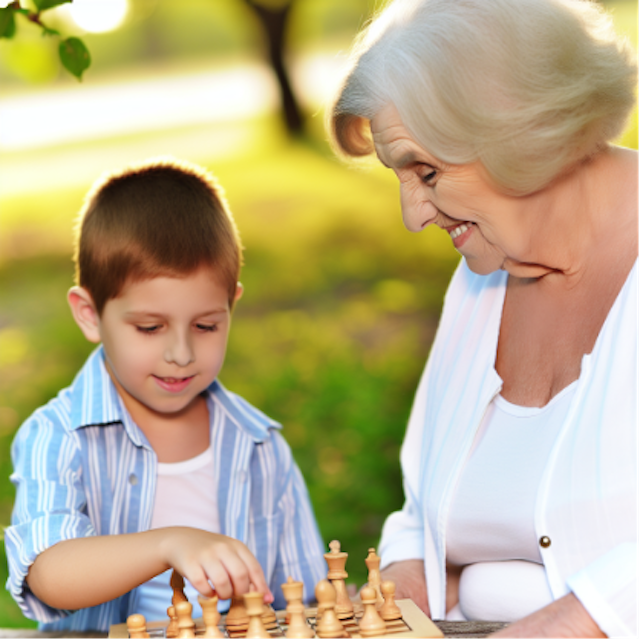
Personal approach: We intentionally cultivated relationships across generational, cultural, and experiential differences, creating regular opportunities for my children to develop empathic understanding beyond their immediate peer group.
Children who experience diverse social connections demonstrate significantly stronger perspective-taking capabilities than those whose interactions remain within homogeneous groups.
Addressing Empathic Challenges: Recognition and Response.
The Consistently Self-Focused Child Children who show persistent difficulty recognizing others’ needs or perspectives often require specific intervention to develop empathic awareness.
Director’s insight: Persistent self-focus in social contexts typically stems from developmental gaps in perspective-taking foundations rather than character issues, requiring skill-building rather than simple behavioural correction.
Intervention approach: Begin with explicit, concrete perspective-taking exercises before expecting spontaneous empathy. Simple practices like “What do you see/What do I see?” games build the cognitive foundation for more complex emotional perspective-taking.
The Emotionally Overwhelmed Child Children who seem indifferent to others’ feelings may actually be experiencing emotional overload that blocks empathic capacity.
Home strategy: Before addressing apparent empathy gaps, make sure your child is calm and in control of their own feelings. Children find it hard to consider others when their own emotional needs overwhelm their attention.
Personal experience: When my son went through a period of apparent empathic regression during a family transition, we discovered his emotional resources were fully consumed by managing his own feelings. Once we provided additional emotional support and regulation strategies, his natural empathy reemerged.
The Analytically-Oriented Child Children with strongly analytical processing styles may need different pathways to develop empathic understanding.
Children with analytical learning preferences often develop strong empathic capabilities when offered approaches that align with their natural processing style, such as emotional “detective work” that engages their analytical strengths.

The Empathy Dividend: Long-term Benefits Beyond Social Harmony.
From Social Understanding to Academic Comprehension Children who develop strong empathic capacities consistently demonstrate greater sophistication in understanding literature, history, and social studies concepts.
Classroom evidence: Students with well-developed perspective-taking abilities typically engage more deeply with character motivations in literature and complex historical contexts than those with less developed empathic capacities.
Director’s observation: The progression from interpersonal empathy to academic perspective-taking represents a critical transfer of cognitive flexibility across domains.
From Emotional Recognition to Communication Efficacy Early comfort with emotional awareness builds capacity for the communication sophistication essential for leadership and collaboration.
Personal observation: My children’s early immersion in emotional vocabulary and perspective consideration built foundations for remarkably effective communication in group contexts, where they naturally consider audience needs and viewpoints.
From Empathic Understanding to Ethical Reasoning Children who regularly practice perspective-taking develop more sophisticated frameworks for ethical decision-making.
Parent perspective: As my children entered pre-adolescence, I observed them apply the same perspective-taking capacities developed through empathy practice to increasingly complex ethical questions, considering impacts beyond immediate outcomes.
Beginning Tomorrow: Three Practices for Nurturing Empathic Development
Establish Perspective Check-Ins Integrate regular opportunities to consider viewpoints beyond the child’s immediate experience.
Quick application: Create a simple routine of asking “I wonder how they’re feeling?” or “What might they be thinking?” when discussing others’ actions in books, shows, or daily interactions.
Director’s insight: Children who experience regular invitation to consider others’ perspectives develop significantly stronger automatic empathic awareness than those rarely prompted to shift viewpoints.
Implement Emotion Coaching Integrate specific practices that develop emotional vocabulary and recognition.
Family practice: In our home, we established a simple “feeling check” routine during bedtime conversation, supporting emotional awareness that later translated to recognition of others’ emotional states.
Quick tips:
- Label emotions with specific vocabulary beyond happy/sad/mad
- Validate emotional experiences without judgment
- Connect feelings to potential causes and effects
- Notice emotional cues in books, shows, and daily life
- Model healthy emotional expression and management
Create Consequential Contribution Opportunities Provide regular experiences of making a genuine difference to others’ wellbeing.
Personal experience: When we restructured family responsibilities to ensure my children’s contributions genuinely mattered to the household, their prosocial motivation noticeably increased. This authentic experience built empathic engagement far more effectively than artificial “helping activities.”
Home strategy: Try to integrate responsibilities where efforts have real impact, creating authentic experiences of prosocial actions that build stronger empathic motivation.
Looking Forward: Empathy as Essential Preparation.
As I watched the elementary children in our school who experienced strong empathic development in their early years, I continued to witness how this foundation prepares them for an increasingly complex social world. The child who learned to recognize others’ emotional states navigates friendships with remarkable sophistication. The young student who developed perspective-taking capacities approaches academic content with similar cognitive flexibility. The child who experienced the satisfaction of meaningful contribution demonstrates authentic leadership in community challenges.
Empathic development in early childhood isn’t valuable just for creating harmonious classrooms. Its true worth emerges in the social intelligence, communication capability, and ethical reasoning it builds—capacities increasingly essential in our complex, interconnected world.
In our next “Growing Minds” blog post, I’ll explore how children develop independence and internal motivation through the early stages of development. Until then, I encourage you to ask the transformative question that nurtures empathy: “I wonder what this experience might be like for them?”
,,
