
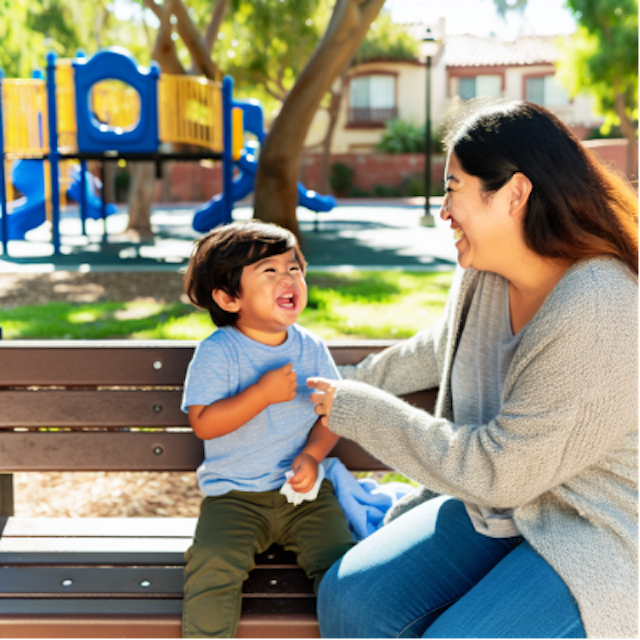
How Everyday Conversations Build Your Child's Brain?
Welcome to our new “Growing Minds” blog series! I’m Toby, Montessori Director for over 25 years and father of two teenagers. Today I’m sharing insights from both my professional experience and personal parenting journey about one of the most powerful tools we have: everyday conversation with our children.
What 25 Years of Montessori Teaching Has Taught Me About Language Acquisition.
I’ve watched hundreds of children develop language skills at different rates and in different ways. But there’s one constant I’ve observed both in my classrooms and with my own children: the profound impact of meaningful, respectful conversation.
When my daughter was just four – she knew all the Dinosaurs and could recite amazing facts at will. Other parents were impressed with her vocabulary. We’d been reading dinosaur books for months, having rich discussions about these creatures that fascinated her. This wasn’t about flashcards or formal lessons—it was the natural outcome of following her interests and engaging in real conversations.
What strikes me after all these years is how simple yet revolutionary Maria Montessori’s approach to language development really was. She understood long before modern neuroscience confirmed it: children absorb language through authentic experiences and meaningful connections, not through drilling or artificial instruction.

The Science Behind the Words: What Happens During Conversations.
After working with hundreds of families across different socioeconomic backgrounds, I’ve seen how dramatically conversation impacts children’s development. The research validates what Montessori educators have always known:
When adults engage children in genuine back-and-forth exchanges, children hear between 1,000-2,000 words per hour. Compare that to passive screen time, which exposes them to only 200-300 words hourly. Even more concerning: having background television reduces meaningful conversation by approximately 30%. Research from the American Academy of Pediatrics highlights these impacts.
These differences accumulate dramatically. By age 3, children from conversation-rich environments will have heard an estimated 30+ million more words than peers with limited verbal interaction. This exposure difference correlates strongly with vocabulary size, reading readiness, and even long-term academic success.
In Montessori environments, we’ve always prioritized rich language experiences through:
- Precise naming of objects and activities
- Detailed process descriptions
- Encouraging children to express needs and observations
- Modelling complex vocabulary in context
- Reading high-quality literature daily
The results speak for themselves—quite literally! Montessori alumni consistently demonstrate exceptional verbal fluency, reading comprehension, and written expression skills.

Critical Windows: When Your Words Matter Most.
In Montessori education, we recognize sensitive periods—windows of opportunity when children are especially receptive to developing specific capabilities. Language acquisition has several distinct sensitive periods that I’ve witnessed both professionally and as a father:
Sound Mapping (0-12 months) During this critical first year, infants are cataloging every sound in their native language. Their babbling isn’t random—it’s deliberate practice! We encourage parents to narrate actions, sing songs, and respond to even the earliest coos. Learn more about infant language development.
Personal experience: With both my children, I spoke in full, grammatical sentences from day one. They developed unusually advanced receptive language. They were bilingual (with Cantonese) and could follow increasingly complex instructions months before they could speak many words in both languages. (More on Bilingual Learners coming soon)
Vocabulary Acquisition (12-36 months) This is when we see that remarkable “language explosion”—children acquiring 5-10 new words daily. During this period, children in our toddler programs typically experience vocabulary growth from 50 words to 300+ words.
Personal experience: My daughter’s vocabulary quadrupled between 18-24 months. We played a game called “What’s that called?” during walks, naming everything from “cumulus clouds” to “deciduous trees.” Years later, she still loves biology and her teacher comments on her exceptional scientific vocabulary.
Grammar and Syntax Development (2-6 years) Children begin instinctively absorbing the rules of language, experimenting with sentence construction and verb tenses. This is when those adorable mistakes happen (“I runned fast!” “I goed there yesterday”).
Personal experience: Rather than correcting my children’s grammar mistakes, I simply modelled correct usage: “Yes, you ran so fast!” This gentle approach allowed them to refine their language without dampening their enthusiasm for communication.
Abstract Language and Reasoning (5-9 years) Children begin understanding metaphors, humour, and abstract concepts. They use language to analyse, predict, and explain their thinking.
Personal experience: Family dinner discussions became increasingly sophisticated during this period. By age 8, both my children could engage in longer conversations on topics ranging from environmental issues to historical events.
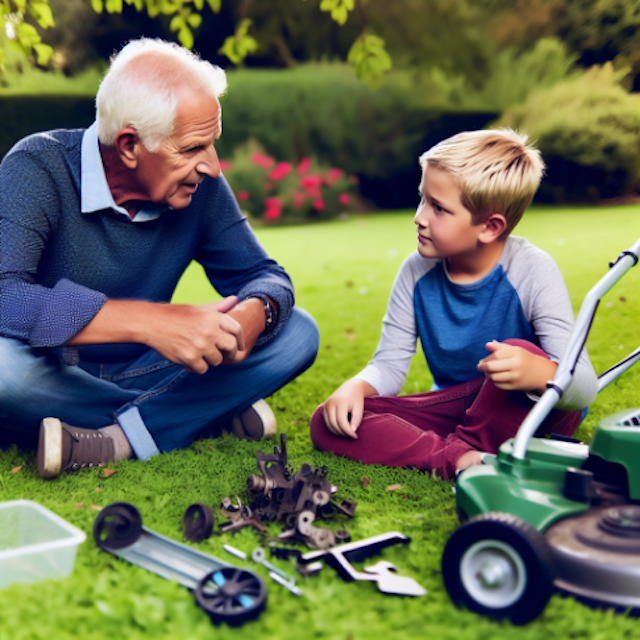
Six Simple Practices From Montessori Classrooms - That work just as well at home.
I’ve found that parents often overcomplicate language development. The most effective approaches are surprisingly simple and can be integrated into everyday activities:
- Practice the Art of Observation Before Speaking In Montessori classrooms, we observe carefully before engaging. This allows us to meet children where they are, rather than imposing our agenda. At home, try watching your child for 30 seconds before jumping in with questions or directions. What are they focused on? What vocabulary might enhance their experience?
- Use Precise, Rich Vocabulary Don’t talk down to children or limit yourself to “simple” words. In our classrooms, we say “chrysalis” instead of “cocoon,” “sphere” instead of “ball.” Children absorb these precise terms effortlessly when presented in meaningful context. Explore vocabulary-building tips.
Quick tip: Introduce one interesting new word each day related to your child’s interests. My son went through a transportation phase where he delighted in learning words like “excavator,” “locomotive,” and “suspension bridge.”
- Ask Thought-Provoking Questions Rather than quiz questions (“What colour is this?”), ask questions that invite thinking: “I wonder why leaves change colours in fall?” or “How do you think they built this bridge?” These questions spark language-rich conversations and develop critical thinking simultaneously.
- Honor Silence and Wait Time In our fast-paced world, we often rush to fill silence. In Montessori environments, we practice comfortable silence, giving children time to process and formulate responses. Try counting silently to five after asking a question before speaking again.
Personal experience: My more introverted son needed longer processing time than my daughter. When I learned to wait patiently, his responses became remarkably thoughtful and complex.
- Read Interactively and Follow Interests Deeply Reading isn’t just about finishing the story—it’s an opportunity for rich discussion. In classrooms, we ask open-ended questions, make connections to children’s experiences, and sometimes pause before page turns to wonder what might happen next.
Quick tip: Create a reading ritual that includes both “book time” and “discussion time.” I used to love discussing what Stick Man was doing right now, or whether the 3 pigs carried on living together. Debating and offering new ideas can do wonders for expanding thinking skills
- Model Thinking Aloud Verbalize your thought processes: “I’m trying to figure out how to fix this drawer. First, I need to identify what’s causing it to stick…” This exposes children to problem-solving language and complex thinking patterns.
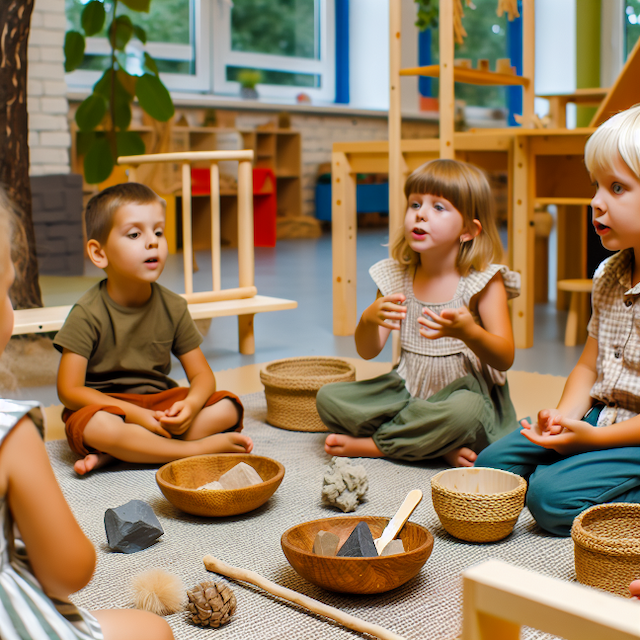
The Ripple Effects: Language Development Extends Far Beyond Words.
Academic Foundation Children with strong early language exposure typically become strong readers, writers, and critical thinkers. I’ve seen this correlation repeatedly in my students’ academic achievements as they grew up.
Social Competence Language gives children tools to navigate social situations, express feelings appropriately, and resolve conflicts verbally rather than physically. These skills become increasingly important as children mature.
Emotional Regulation When children can name feelings and articulate needs, they gain greater self-control. My own teenagers can now identify and express complex emotions, a skill that serves them well during these turbulent years.
Cultural Understanding Rich vocabulary and conversation expose children to diverse perspectives and ideas, fostering empathy and global awareness.
Starting Today: One Small Change That Makes a Big Difference
If I could recommend just one practice to every parent and educator, it would be this: Turn one daily routine into a conversation opportunity. Whether it’s bath time, the drive to school, or preparing dinner—transform that everyday moment into a language-rich experience through questions, observations, and attentive listening.
With my own children, our bedtime routine became our richest conversation time. Those sleepy, guard-down moments often led to discussions that strengthened both their language skills and our connection.
These simple practices yield powerful results. The conversations you have today are literally building your child’s brain for tomorrow.
Stay tuned for the next instalment in our “Growing Minds” series, where we’ll explore how movement and language development are intrinsically connected in the young child.
,,
