
How Sensory Experiences Build the Foundation for Abstract Thinking?
Welcome to the third instalment of our “Growing Minds” blog series at Kids Channel Montessori! Today, we’re exploring how rich sensory experiences in early childhood create the neural foundation for advanced abstract thinking later in life.
The Pine Cone Lesson I'll Never Forget.
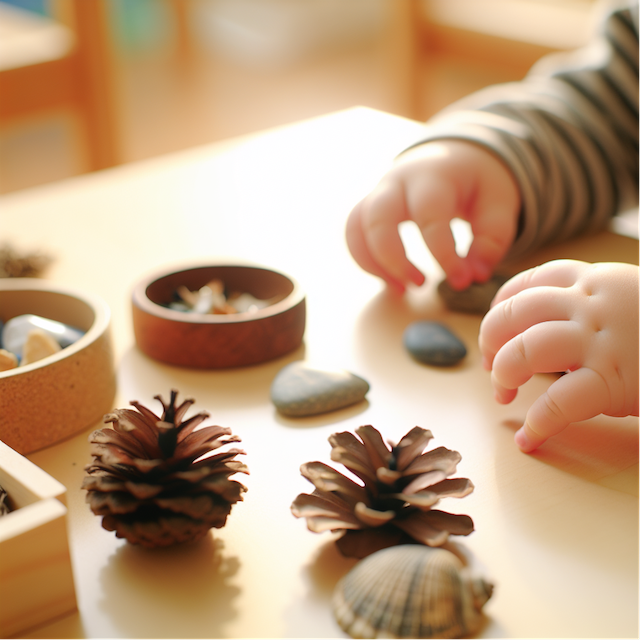
Years ago, I watched a 4-year-old in our classroom holding two pine cones. “This one is rougher,” she told me, carefully running her fingertips over the scales. “And it has a pattern that goes around and around. The other one feels lighter and the pattern goes up.”
What struck me wasn’t just her vocabulary but her ability to detect abstract patterns from sensory information. That moment crystallized something I’ve observed throughout my career: children who engage deeply with sensory experiences develop remarkable capacities for abstract thinking.
Later that year, when this same child easily grasped mathematical patterns in our bead material, I wasn’t surprised. Her brain had been trained through sensory exploration to recognize patterns, relationships, and abstract properties—the very foundations of mathematical thinking.
This connection between sensory experience and abstract cognition isn’t just anecdotal. It’s a cornerstone of Montessori philosophy and increasingly validated by neuroscience research.
How the Brain Builds Abstractions: The Sensory Foundation.
Concrete Sensory Experience → Pattern Recognition → Concept Formation → Abstract Thinking
Modern brain research reveals why this progression is essential:
Neural Pathway Development When children engage in sensory exploration, they create and strengthen neural pathways that will later be repurposed for abstract thought. These early pathways form the architecture for all future learning.
Multi-Sensory Integration Abstract concepts require integration across brain regions. Children who experience the same concept through multiple senses (touching, seeing, hearing, moving) develop robust neural networks that support complex thinking.
Memory Formation Our strongest memories are multi-sensory. When children learn concepts through hands-on experience, they create powerful memory traces that make abstract information more accessible later.
Classroom observation: Children who spent extended time in our sensorial area during ages 3-4 consistently showed stronger mathematical reasoning at ages 5-6 than those who skipped ahead to “academic” work. This foundation matters tremendously.
Personal experience: My son struggled with mathematical abstractions until we revisited sensory-based explorations of quantity. Once he rebuilt that sensory foundation, the abstract concepts suddenly made sense to him.
The Five Senses: Each One's Unique Contribution to Abstract Thinking.
Touch: The Primary Teacher The tactile sense provides our most fundamental information about the world. Children who regularly explore through touch develop:
- More precise discrimination abilities
- Stronger spatial awareness
- Enhanced ability to mentally manipulate objects
- Better memory for physical properties
Classroom evidence: Our sandpaper letters give children tactile impressions of abstract symbols. I’ve found that children who master these tactile letters learn to read more easily than those taught with visual methods alone.
Visual Discrimination: Patterns and Relationships Refined visual perception builds the capacity to:
- Detect subtle differences and similarities
- Recognize patterns and sequences
- Organize information hierarchically
- Process symbolic representation (essential for reading)
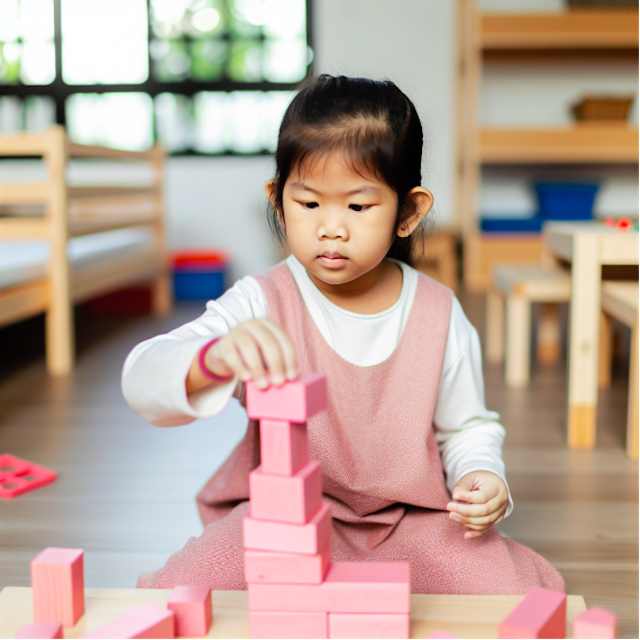
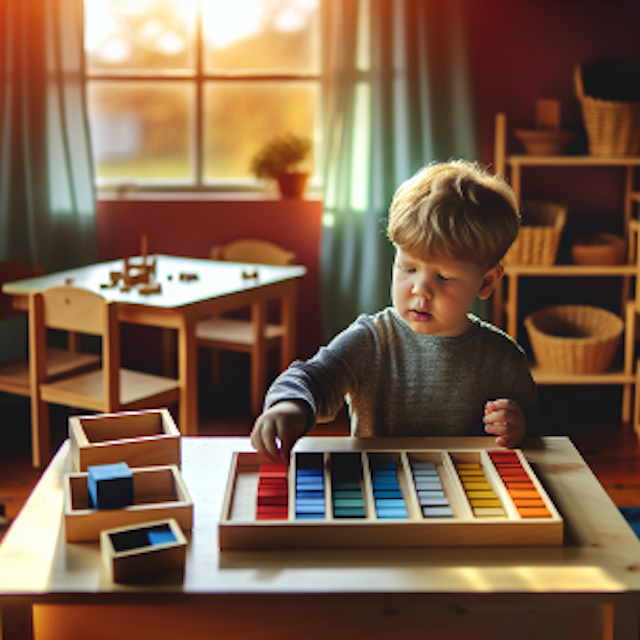
Director’s insight: Montessori’s visual discrimination materials (like the pink tower and colour tablets) prepare the mind for mathematical thinking and reading in ways that flash cards simply cannot.
Auditory Processing: Language and Logic Careful listening experiences develop:
- Phonological awareness (critical for reading)
- Sequential processing
- Ability to follow multi-step instructions
- Language precision
Personal story: My daughter struggled with reading fluency until we increased sound games and listening activities. The auditory foundation was strengthened, and her reading improved dramatically.
Taste and Smell: Emotional Memory and Classification These often-overlooked senses contribute to:
- Strong emotional memory connections
- Classification skills
- Vocabulary development
- Cultural awareness
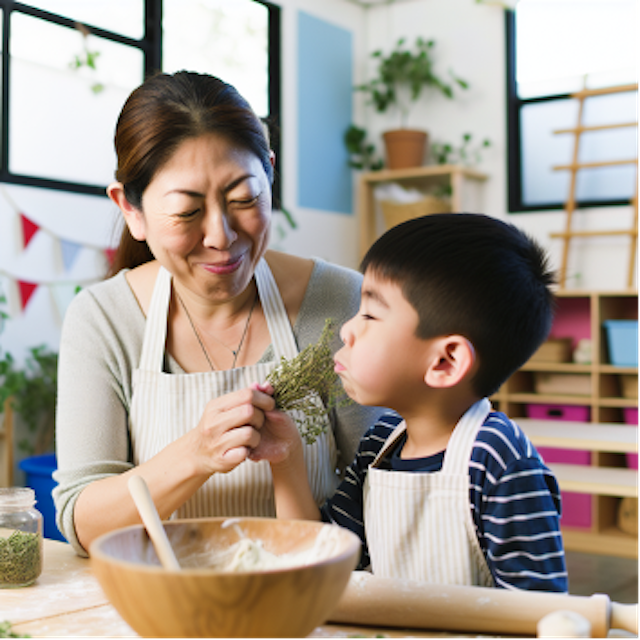
Home application: Cooking activities engage these senses while building classification skills and mathematical thinking through measurement.
Kinaesthetic Awareness: Greater refinement of Body awareness and movement provide:
- Spatial understanding
- Sequencing abilities
- Internalization of concepts
- Action-based problem solving
Children who struggle with abstract math concepts often benefit from “walking” through problems physically before attempting paper-and-pencil solutions.
Critical Periods: When Sensory Foundations Matter Most.
Maria Montessori identified specific sensitive periods for sensory development, and modern neuroscience confirms these critical windows:
Birth to Age 3: Sensory Discrimination During these formative years, the brain is especially receptive to refining sensory perceptions. Children naturally seek to organize sensory information—sorting, matching, and classifying their experiences.
Director’s advice: Provide rich, varied sensory experiences during this window. Avoid overwhelming stimulation but offer plenty of natural materials with diverse properties to explore.
Ages 3-6: Sensory Integration and Refinement This period focuses on integrating sensory information and developing increasingly precise discrimination. Children become capable of nuanced sensory judgments and classifications.
Home approach: Your primary environments should offer sequenced materials that isolate specific sensory qualities—weight, texture, sound, size—allowing children to build increasingly refined perceptual abilities.
Ages 6-9: Connecting Sensory to Symbolic During this transition, children begin connecting concrete sensory experiences to abstract symbols and concepts. This bridge is essential for advanced academic learning.
Personal experience: When my son struggled with fractions in third grade, we returned to sensory-based fraction circles he could manipulate. This concrete experience rebuilt the foundation he needed for abstract fraction operations.
Ages 9-12: Abstract Reasoning Emerges Children with strong sensory foundations now develop sophisticated abstract thinking abilities, building on their concrete experiences.
Long-term observation: In tracking our alumni through secondary education, I’ve consistently noted that those who had the fullest sensory foundation in early childhood demonstrate the strongest abstract reasoning in adolescence.
Seven Sensory Activities That Build Abstract Thinking Skills.
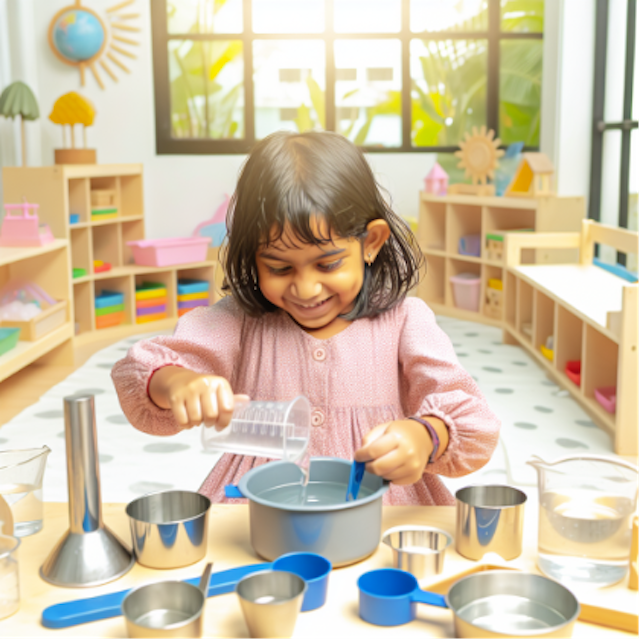
- Sensory Classification Games Gather collections of objects with varying properties (smooth/rough, heavy/light) and invite children to sort them by different attributes. This builds the cognitive skill of considering multiple properties simultaneously—essential for later scientific and mathematical thinking.
Quick tip: Use natural materials like stones, seeds, or shells that have complex combinations of properties rather than simplified plastic toys.
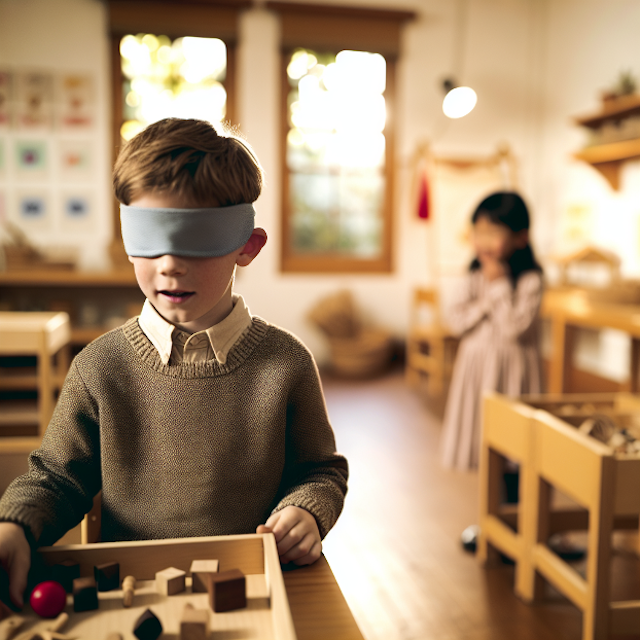
- Blindfolded Exploration Simple games where children identify objects by touch alone build mental mapping abilities that support later abstract visualization.
Personal anecdote: My daughter and I played “mystery bag” games regularly. Years later, her high school geometry teacher commented on her spatial visualization abilities.
- Sensory Vocabulary Building Provide precise language for sensory experiences: not just “soft” but “downy,” “silky,” “velvety.” This verbal precision builds the neural bridge between sensation and abstraction.
Classroom observation: Children with larger sensory vocabularies consistently demonstrate stronger descriptive writing skills in elementary years.
- Cooking with Measurement Few activities combine sensory experience with abstract concepts as effectively as cooking. Measuring, timing, and transforming ingredients engages all senses while introducing mathematical concepts.
At-home approach: With my own children, baking became our laboratory for fractions, proportions, and chemical reactions—all grounded in rich sensory experience.
- Sound Discrimination Games Activities that refine auditory discrimination (matching sound cylinders, identifying environmental sounds, playing musical intervals) develop the sequential processing needed for both music and mathematics.
- Temporal Sequencing Activities that involve recognizing and creating patterns over time (musical sequences, growth cycles, story sequencing) build the cognitive structures needed for understanding abstract sequential relationships.
Classroom example: Our plant growing journals, where children document changes over time, create concrete foundations for understanding abstract time concepts and predictive relationships.
- Gradation Activities Arranging objects in order by size, shade, weight, or sound pitch develops the mental structures needed for understanding continuums and relationships—foundational for mathematical thinking.
Personal experience: My son’s early struggles with number sense improved dramatically after weeks of working with weight tablets and other graded sensory materials.
The Digital Dilemma: Technology and Sensory Development.
After careful observation and research, my perspective is nuanced:
The Sensory Limitations of Screens Digital experiences primarily engage only two senses (sight and sound) and provide simplified sensory input compared to the complex, integrated experiences of the physical world. Additionally, screens cannot provide the vestibular and proprioceptive feedback essential for integrated brain development.
The Critical Foundation First Approach I’ve found the most successful approach is ensuring robust sensory foundations before introducing significant screen time. Children who have developed strong sensory integration in their early years seem better equipped to use technology as a tool rather than becoming dependent on its stimulation.
Personal approach: With my own children, we prioritized extensive sensory exploration during their early years. This foundation allowed them to approach technology with greater discernment in later childhood and adolescence.

Director’s recommendation: If your child is already immersed in digital experiences, intentionally counterbalance with rich sensory activities. The neural pathways are still developing and responsive to real-world sensory input.
From Sensory Exploration to Academic Excellence: The Path I've Witnessed.
Mathematical Understanding Children with refined sensory discrimination consistently develop stronger mathematical abilities. The ability to perceive, compare, and gradate sensory properties directly translates to understanding numerical relationships.
Language and Reading Proficiency Sensory discrimination underlies phonological awareness, essential for reading. Children who can differentiate subtle sounds, recognize visual patterns, and integrate sensory information typically become stronger readers.
Personal evidence: Both my teenagers are avid readers and writers. I credit their early sensory-rich environment for developing the perceptual foundations for language processing.
Scientific Thinking The ability to observe carefully, detect patterns, and recognize relationships—all developed through sensory exploration—forms the foundation for scientific thinking.
Creative Problem-Solving Children who explore materials freely develop flexibility in thinking and approach problems from multiple perspectives.
Starting Today: Creating a Sensory-Rich Foundation at Home.
Prioritize Depth Over Breadth Rather than offering many brief sensory experiences, allow your child to explore fewer materials more deeply. Repeated exploration of the same material allows the brain to move from novelty to perception of patterns and properties.
Quick tip: Rotate a smaller selection of sensory materials rather than maintaining a large collection that encourages superficial exploration.
Provide Multi-Sensory Learning Opportunities When introducing new concepts, engage as many senses as possible. For example, when learning about autumn, collect leaves to touch, smell, and hear (crunching), not just look at pictures.
Personal experience: My son had little interest in spelling until we introduced a multi-sensory approach—tracing words in sand, building them with clay, and writing them in the air. This integrated approach made abstract spelling patterns concrete.
Offer Natural Complexity Natural materials provide sensory richness that manufactured toys often lack. A collection of seashells offers infinite variations in texture, weight, pattern, and sound—complexities that prepare the brain for detecting subtle distinctions.
Follow the Child’s Interest Observe which sensory experiences captivate your child and expand on these areas of interest. This targeted approach respects their developmental readiness and builds confidence.
Director’s insight: In my years of observation, I’ve noted that children instinctively seek the sensory experiences their brain needs for development. Our role is providing rich options and following their lead.
Provide Language Alongside Experience As your child explores sensory materials, offer precise vocabulary for their discoveries. This verbal-sensory connection builds the bridge to abstraction.
Looking Forward: The Lifelong Impact of Sensory Foundations.
The progression from concrete sensory experience to abstract thinking isn’t just an educational theory—it’s the natural development pattern of the human brain. By honouring and supporting this progression, we equip children with cognitive tools that serve them throughout life.
In our next “Growing Minds” blog post, I’ll explore how social-emotional development intertwines with cognitive growth. Until then, I encourage you to observe your child’s sensory explorations with new appreciation for the sophisticated cognitive foundations being built through these seemingly simple activities.
,,
